|
What Are the Costs for a Hong Kong Company to Set Up a Subsidiary in Japan?What Are the Costs for a Hong Kong Company to Set Up a Subsidiary in Japan?How Much Does It Cost for a Hong Kong Company to Establish a Subsidiary in Japan?As more Hong Kong companies pursue international expansion, Japan has emerged as an increasingly attractive destination for establishing a local presence in Asia. Setting up a Japanese subsidiary can strengthen corporate credibility, provide direct access to Japanese customers, and create a solid foundation for hiring local employees, establishing banking relationships, and conducting business in Japan.For many companies considering market entry, however, one practical question comes first: How much does it actually cost to establish a company in Japan? This guide provides Hong Kong companies with a practical overview of the key costs involved in establishing a Japanese subsidiary, including company structure, registration expenses, capital considerations, office costs, professional fees, and other expenses businesses should consider when planning their expansion into Japan.
I. Why Establish a Subsidiary in Japan?A Japanese subsidiary is an independent legal entity incorporated under Japanese law. For Hong Kong companies planning a long-term presence in Japan, establishing a subsidiary can provide greater operational independence and strengthen credibility with local customers, suppliers, and business partners.Compared with a representative office, and depending on the company’s objectives, compared with operating through a branch. a subsidiary provides a clear local corporate presence and can conduct business activities in its own name. A Japanese subsidiary can generally:
Establishing a subsidiary can be particularly valuable for companies operating in industries such as:
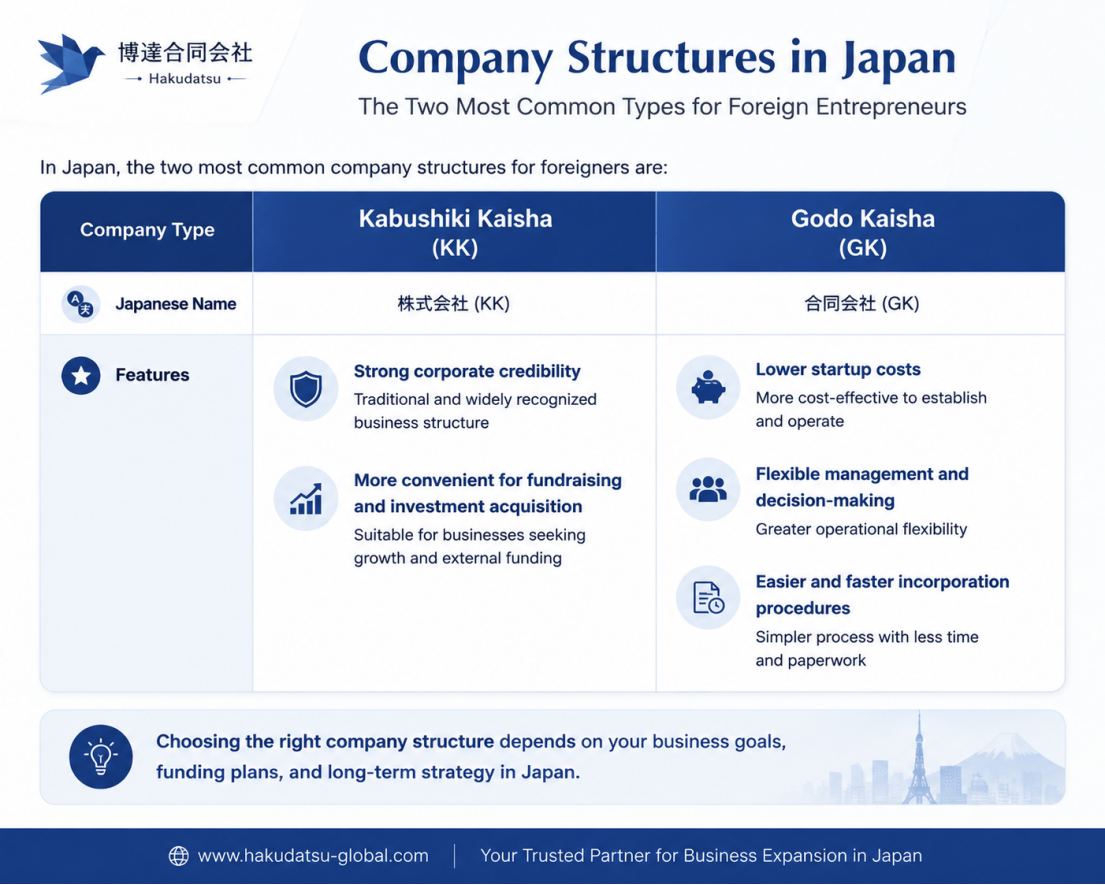
For Hong Kong companies seeking to move beyond cross-border sales and build a long-term presence in the Japanese market, establishing a local subsidiary can provide a stronger foundation for future growth, recruitment, partnerships, and business development. The Two Most Common Company Structures for Foreign CompaniesThe two most common legal structures for foreign companies are:Kabushiki Kaisha (KK)Godo Kaisha (GK)For a detailed guide, please click below: https://www.hakudatsu-global.com/list_5/158.html 1. Kabushiki Kaisha (KK)KK is the most traditional and reputable company structure in Japan. Advantages:
2. Godo Kaisha (GK)GK is similar to an LLC and is popular among startups and small businesses. Advantages:
The two most common types of companies established by foreign businesses in Japan are Kabushiki Kaisha (KK) and Godo Kaisha (GK). For a detailed comparison of these two corporate structures, please see our guide below: How Foreigners Can Register a Company in Japan: A Complete Guide-Hakudatsu Co., Ltd.
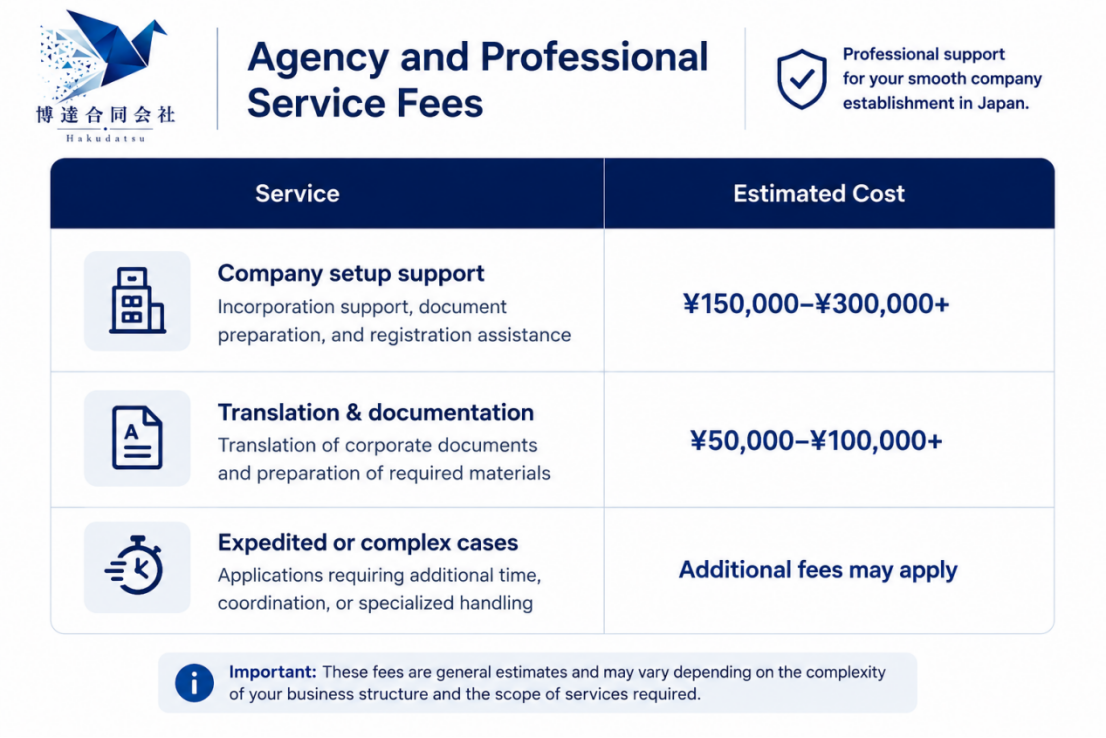
III. Agency and Professional Service FeesMost overseas companies choose to work with local professionals when establishing a subsidiary in Japan, particularly when the parent company and shareholders are located outside the country.Depending on the scope of support, professional services may include:
Typical professional fees may vary depending on the complexity of the corporate structure and the services required. For Hong Kong companies unfamiliar with Japanese corporate procedures, professional support can help reduce documentation errors and coordinate the establishment process more efficiently.
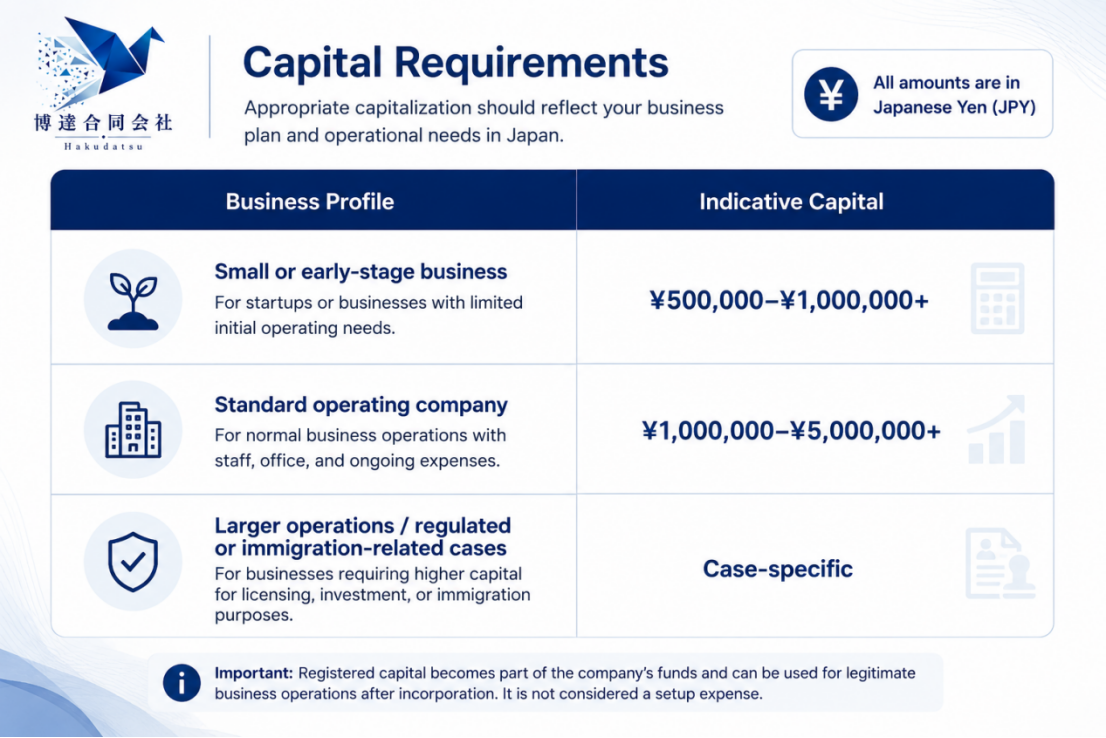
IV. Capital RequirementsUnder Japanese corporate law, a KK or GK can generally be incorporated with a very small amount of registered capital. However, establishing a company with only ¥1 of capital is rarely practical for an operating business.The appropriate amount of capital should reflect the company's expected operating expenses, business model, office requirements, staffing plans, and overall market-entry strategy. For general planning purposes: Companies should avoid selecting their capital amount solely based on the legal minimum.
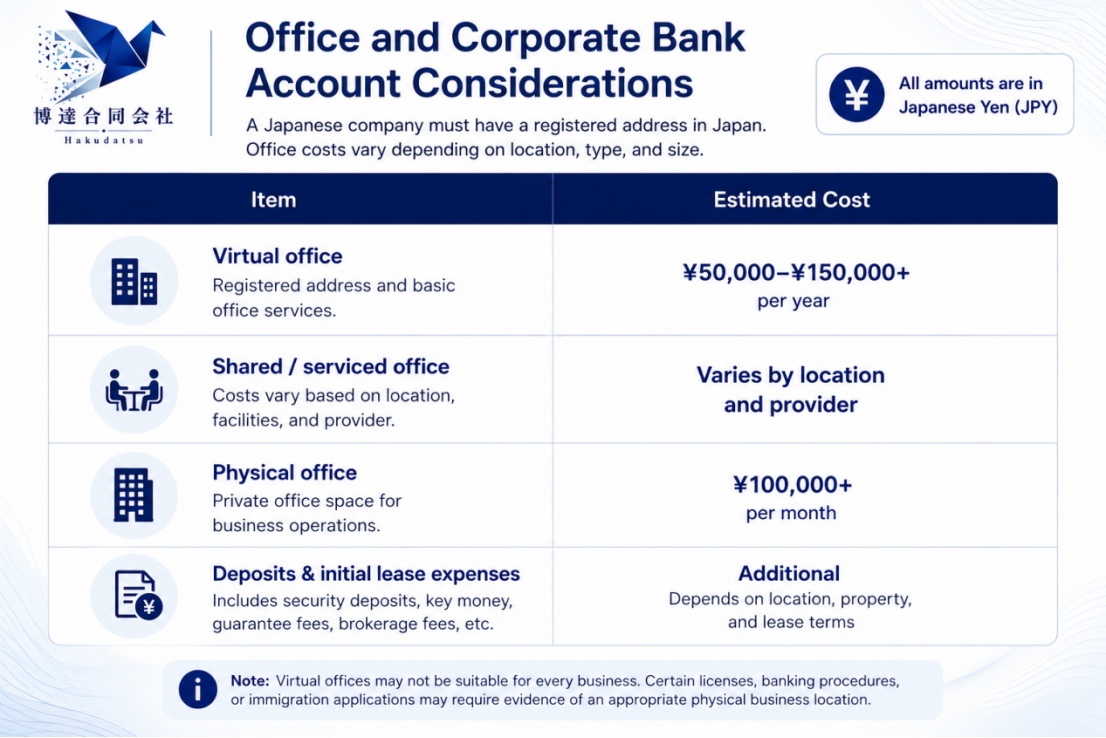
Capital Is Not Simply a Setup CostRegistered capital is different from an incorporation fee.After the company has been established, its capital generally becomes part of the company's available funds and can be used for legitimate business expenses, such as office rent, salaries, marketing, professional services, and other operating costs. Important: If the establishment of the Japanese company is connected with a Business Manager status of residence, separate immigration requirements may apply. Companies should confirm the latest requirements with an appropriately licensed Japanese immigration professional before determining their capitalization and business structure. All monetary amounts in this article are stated in Japanese yen (JPY) unless otherwise indicated. V. Office and Corporate Bank Account ConsiderationsA Japanese company must have a registered head-office address in Japan.Depending on the nature of the business, companies may consider:
Approximate Cost May Include:Office costs vary significantly depending on the city, location, size, and type of property. Companies should also be aware that a virtual office may not be suitable for every business. Certain licenses, banking procedures, or immigration applications may require evidence of an appropriate physical business location.
Opening a Corporate Bank Account in JapanAfter incorporation, the company may apply to open a Japanese corporate bank account.However, incorporating a Japanese company does not guarantee that a bank account will be approved. Japanese financial institutions conduct their own KYC and compliance reviews. Banks may request information such as:
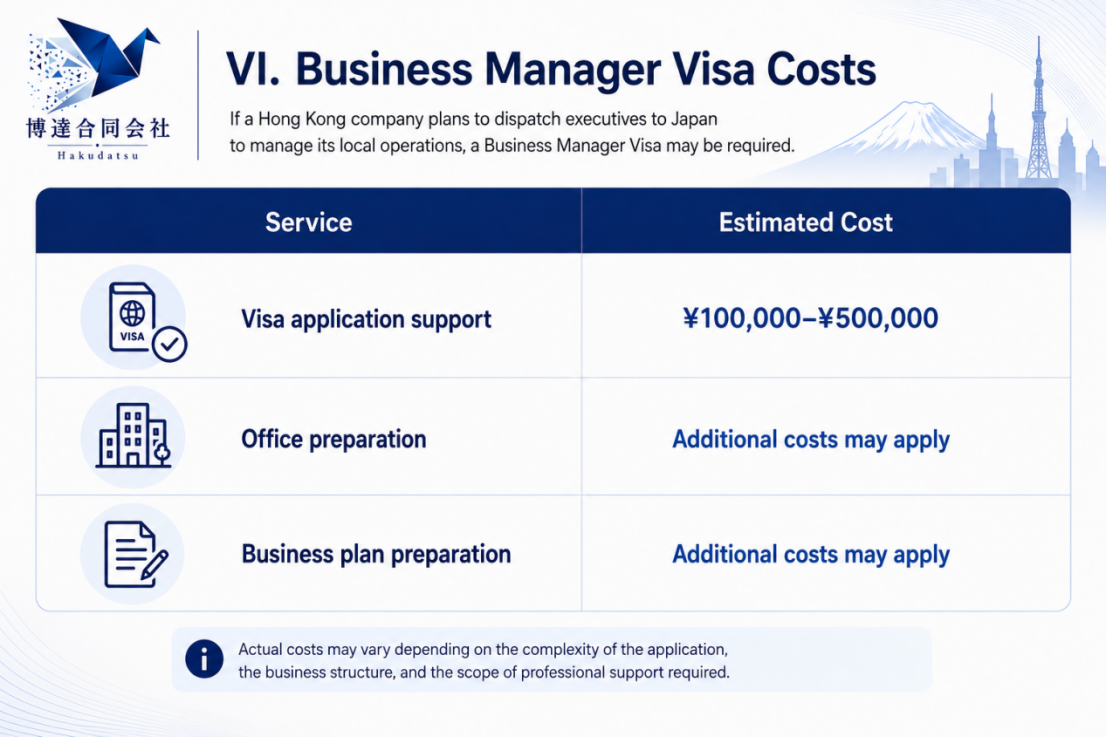
For newly established foreign-owned companies, demonstrating a clear business purpose and genuine operations in Japan can be particularly important. VI. Business Manager Visa CostsIf a Hong Kong company plans to dispatch executives to Japan to manage its local operations, a Business Manager Visa may be required.Additional costs may include:
Estimated Costs: |

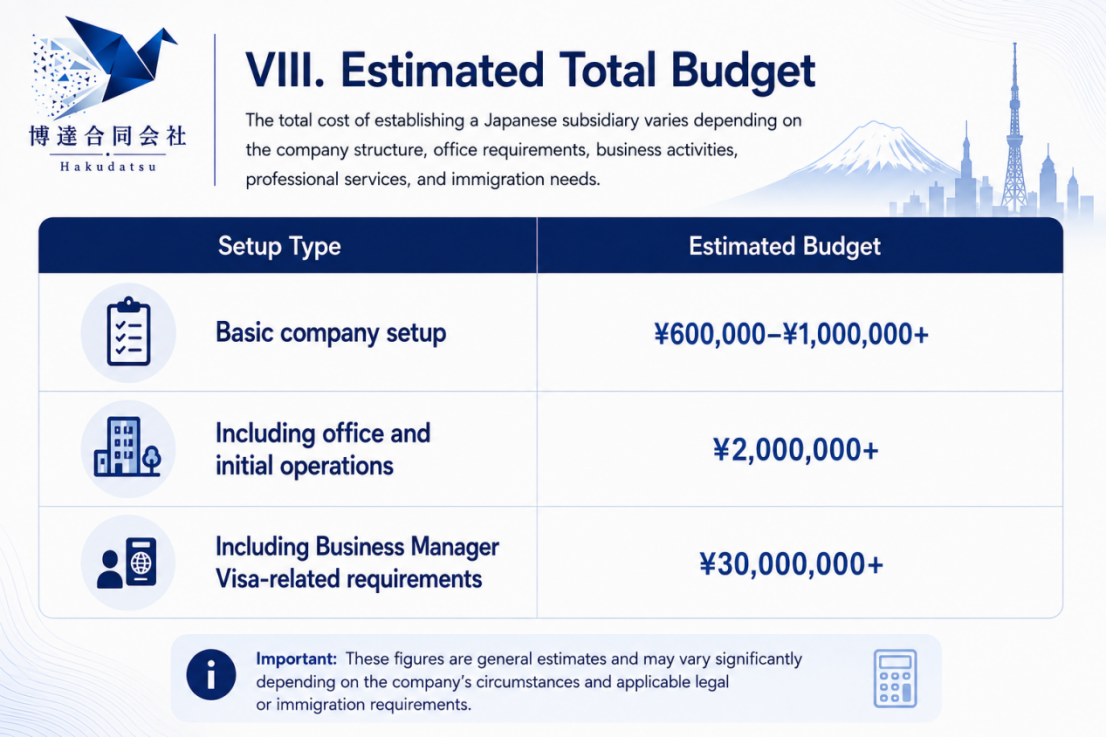 These figures are general estimates and may vary significantly depending on the company's circumstances and applicable legal or immigration requirements